Weed Legalization Federal Level: What’s the Future Hold?

Twenty-four states have already opened the doors to legal recreational cannabis, yet the federal government still classifies the plant alongside heroin as a Schedule I drug. I spent years in state hearing rooms watching lawmakers grapple with this massive legal gap. It is a bizarre reality where 38 states allow medical use, but the national “Big Boss” in Washington D.C. says it remains strictly forbidden. This conflict creates a messy landscape that affects everything from your local tax rates to how businesses handle their cash.
Federal legalization is not just a simple switch that someone flips in Congress. It is a massive policy shift that involves fixing old mistakes and building a new economy from scratch. During my time advising on drug policy, I often thought about the 1937 Marihuana Tax Act, a confusing bit of history that started this whole mess.
Today, we are trying to undo decades of those old rules. This article looks at why the government is taking so long to change and what a legal future might actually look like for you.
Key Legal Milestones:
- 24 states allow recreational use for adults.
- 38 states have active medical cannabis programs.
- The federal government still views cannabis as a high-risk illegal drug.
- New laws are being debated to help cannabis shops use normal banks.
I have seen firsthand how these rules change lives. We are moving toward a world where the federal government might finally catch up to the states. To understand where we are going, we have to look at the money, the law, and the people fighting to change the system. It is a complex puzzle, but the pieces are finally starting to fall into place.
Why is cannabis still illegal at the federal level?
The federal government classifies cannabis as a Schedule I substance under the Controlled Substances Act of 1970, a category reserved for drugs with a high potential for abuse and no accepted medical use. This rigid classification creates a total ban that overrides any individual state’s decision to legalize.
I have sat through dozens of legislative hearings where lawmakers grapple with the Controlled Substances Act of 1970. This law is the bedrock of prohibition. It doesn’t just regulate; it categorizes drugs into “schedules” based on perceived danger.
By placing cannabis in Schedule I, the government puts it in the same legal bucket as heroin and LSD. It is a stubborn, outdated designation that ignores decades of peer-reviewed data.
The Drug Enforcement Administration (DEA) is the agency that holds the keys to this system. They oversee drug scheduling and have historically resisted efforts to move cannabis to a less restrictive category. This creates a massive hurdle for Weed Legalization because, under the U.S.
Constitution’s Supremacy Clause, federal law technically wins any fight with state law. Even if your state says “yes,” the feds still say “no.”
Key Pillars of Federal Prohibition
- The No-Medical-Value Myth: Schedule I status legally mandates that the drug has zero health benefits, making federal research nearly impossible.
- The 1970 Framework: Most of our current drug laws are based on Nixon-era policies rather than modern science.
- High Abuse Potential: The DEA maintains that cannabis is highly addictive, despite many experts arguing it is less habit-forming than legal alcohol.
- International Treaties: The U.S. is part of global agreements that historically required strict drug enforcement.
In my experience, the most frustrating part is how this status blocks standard business operations. Because Uncle Sam views it as a dangerous narcotic, cannabis companies often can’t use traditional banks or claim normal tax deductions. This friction is the primary obstacle that economic and social pressures must eventually break through. The federal-state conflict isn’t just a legal quirk; it is a wall that keeps the industry in a permanent state of limbo.
How Have States Legalized Cannabis While Federal Law Stands Still?
States have bypassed federal restrictions by passing their own laws to allow cannabis for medical or adult use, often relying on “safe harbor” policies where the federal government chooses not to interfere with well-regulated state markets.
Over 75% of the country now lives in a place where some form of cannabis is legal. This shift started in 1996 when California became the first to green-light medical marijuana. I remember watching those early legislative battles; the focus was strictly on patients. By 2012, Colorado and Washington pushed the envelope further by launching the first recreational markets.
Today, the map is a patchwork of rules. Some states only allow medical use, while others have fully opened the doors for adult-use (recreational) sales. Despite the federal ban, these markets have exploded into a massive industry that Washington can no longer ignore.
| Legalization Milestone | Year Introduced | Impact |
|---|---|---|
| First Medical Market (CA) | 1996 | Set the blueprint for patient access |
| First Recreational Sales (CO/WA) | 2012 | Proved tax revenue potential |
| Total State Sales | 2021 | Generated over $25 billion in revenue |
The money is the real driver here. In my time working with state legislatures, I saw how quickly the conversation changed once tax dollars started flowing. These funds aren’t just sitting in a vault; they are actively building schools and fixing crumbling roads. In 2021 alone, state cannabis markets generated more than $25 billion in sales.
This creates a bizarre reality where you can buy a product legally on one side of a state line but face federal charges for it. While the federal government has mostly looked the other way to let these state experiments run, the friction between local profits and national prohibition is reaching a breaking point.
How Much Money Is at Stake in Federal Cannabis Legalization?
 refreshdelete
Federal legalization could transform the American economy by shifting an estimated $60-80 billion annual illicit market into a regulated system, with total legal sales projected to hit $100 billion by 2030. This shift would provide the government with substantial new tax streams while solving the banking and tax hurdles currently strangling state-licensed businesses.
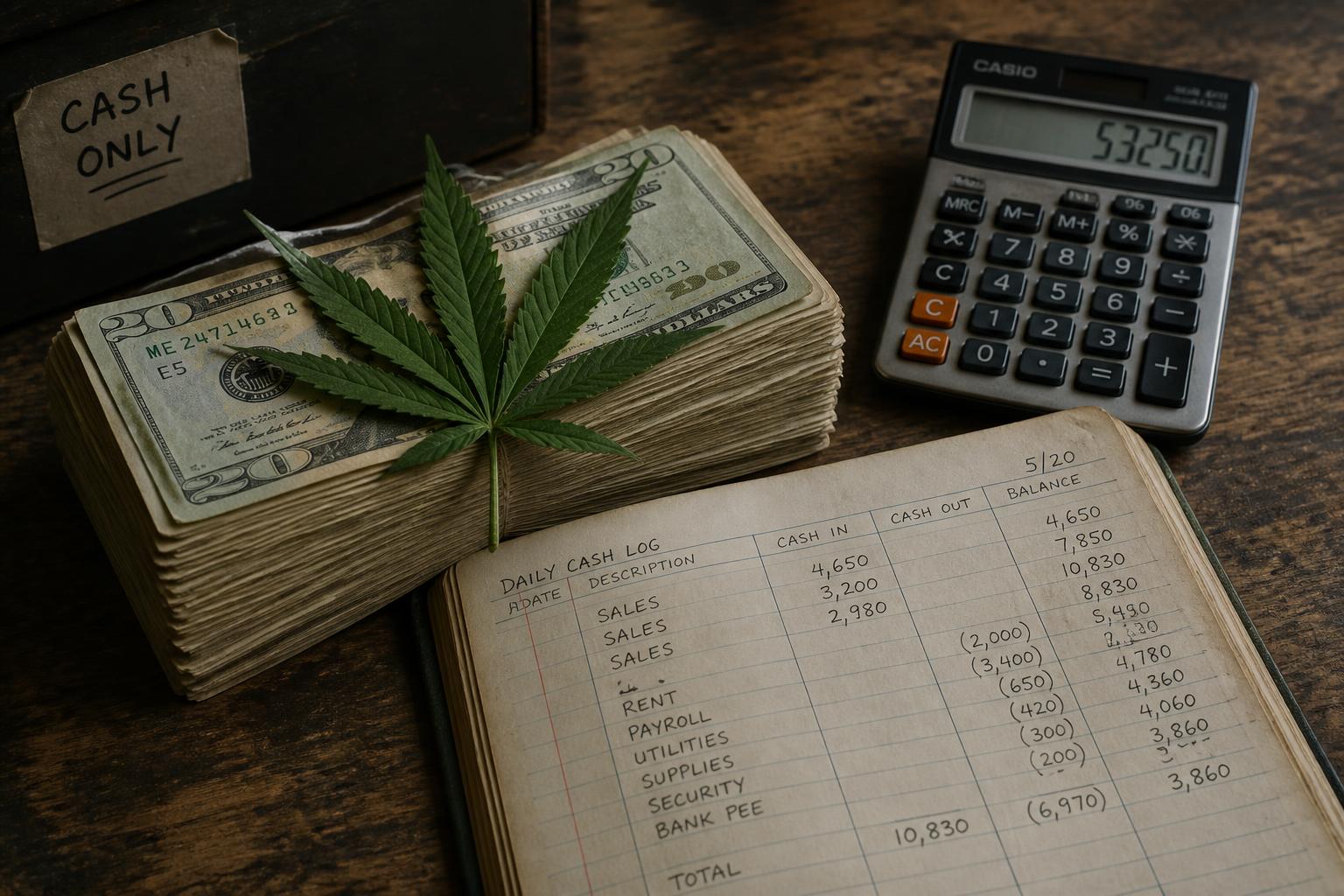
The 80/20 rule of policy applies here: a small number of federal tax changes would solve the majority of the industry’s financial headaches. During my time in the state legislature, I watched local businesses struggle because they couldn’t access basic federal banking services. Because cannabis remains restricted at the national level, most shops operate as cash-only enterprises, making them easy targets for crime and creating a nightmare for auditors.
The tax situation is even more lopsided. A specific rule called Section 280E of the IRS code prevents cannabis companies from taking normal business deductions. Imagine running a grocery store but being forbidden from deducting the cost of your rent or your employees’ wages on your taxes.
This “tax penalty” often leaves legal businesses with almost no profit, even when sales are booming. I’ve heard many owners describe it as a slow-motion financial crisis.
Beyond the spreadsheets, any move by Congress must address social equity. This means creating specific programs to support communities that were hit hardest by past drug enforcement. Lawmakers are currently debating how to balance these goals with the eventual reality of interstate commerce-the ability to ship products across state lines like corn or soy. These economic realities are exactly why the different paths Congress might take will define the industry’s future.
Key Financial Hurdles for Cannabis Businesses
- Lack of access to traditional business loans and credit card processing.
- Effective tax rates that can reach 70% or higher due to 280E.
- High security costs required to protect large amounts of physical cash.
- Complex compliance costs that vary wildly from one state to the next.
How Could Congress Legalize Cannabis?
Congress can legalize cannabis through two primary legislative routes: rescheduling it to a lower category under federal oversight or descheduling it entirely to remove it from the federal drug list. While rescheduling eases research and tax burdens, descheduling treats cannabis more like alcohol, allowing states full regulatory control.
I have watched dozens of committee hearings where lawmakers trip over themselves trying to fix the mess they created decades ago. The current stalemate isn’t just about whether weed is “good” or “bad”-it is about which specific lever of federal power to pull. Each path has vastly different winners and losers.
- Rescheduling via Executive Action – The DEA is currently reviewing a recommendation from the Department of Health and Human Services (HHS) to move cannabis to Schedule III. This would place it in the same category as Tylenol with codeine, finally ending the 280E tax nightmare for businesses and making medical research significantly easier.
- The MORE Act – This bill represents the “big bang” of reform by descheduling cannabis entirely. While it has passed the House of Representatives multiple times, it remains stuck in the Senate because it aims to do everything at once, from ending criminal penalties to creating federal tax structures.
- The SAFE Banking Act – This is the “middle ground” approach designed to protect banks that work with legal cannabis shops. It doesn’t legalize the plant, but it stops the dangerous practice of these businesses being forced to operate as cash-only targets for robbery.
In my experience, the most likely outcome is a slow, grinding shift rather than a single victory. Moving to Schedule III is a massive step, but it doesn’t solve the problem of people still being arrested in states where it remains illegal. It creates a weird reality where a plant can be a legal medicine and a criminal substance at the same exact time.
If Congress chooses the path of total removal from the federal drug list, the entire structure of the American cannabis industry would change overnight. This brings up the massive question of how the government would actually police a legal national market without creating a new set of problems for the states that already have their own rules.
What would happen if weed became federally legal?
Federal legalization would replace the current patchwork of state rules with a unified national system, allowing cannabis to cross state lines and creating up to 1.6 million new jobs. It would introduce federal oversight from agencies like the FDA to ensure product safety and standardized labeling across the country.
By 2025, the landscape of your local dispensary could look entirely different. Once the federal government steps in, the Alcohol and Tobacco Tax and Trade Bureau (TTB) or the Food and Drug Administration (FDA) would likely take the lead. This means strict rules on how products are made, how they are advertised to you, and what kind of warnings must appear on the packaging.
Legalization isn’t just about shop doors staying open; it’s a massive economic engine. Beyond the 1.6 million jobs, we would see the birth of national brands that can ship products from a farm in Oregon to a store in New York. This interstate commerce would lower prices for you but might crush smaller local farmers who can’t compete with industrial-scale operations.
| Feature | Current State-Led Market | Future Federal Market |
|---|---|---|
| Product Safety | Varies by state | Standard FDA oversight |
| Shipping | Stays within state borders | Full interstate commerce |
| Taxation | State and local only | New federal excise taxes |
| Employment | Limited by banking/law | Estimated 1-1.6M new jobs |
However, this shift brings new hurdles. I remember watching state legislators struggle to balance local “mom and pop” shops with incoming corporate giants. Federal law would likely add a new federal excise tax on top of what you already pay, and the government might even set potency limits to address public health concerns. Reconciling 50 different sets of state rules with one big federal hammer will be a regulatory marathon, not a sprint.
When Will Federal Cannabis Legalization Happen?
Federal cannabis legalization depends on Congress resolving the conflict between state-level success and national drug laws. While over half of U.S. states have legalized adult-use marijuana, the federal government still classifies it as a Schedule I substance with no accepted medical use.
I have sat in legislative galleries and watched lawmakers struggle with the same historical hurdles that started during the 1930s. The shift toward a national policy is no longer just about social reform; it is about tax revenue and public safety. Federal law creates a “green wall” that prevents businesses from using normal banks, making the industry a target for crime because they deal mostly in cash.
The path forward requires balancing social equity with corporate interests. We are moving toward a system where the federal government likely oversees interstate trade while letting states keep their own local rules. This transition is a massive policy shift that involves the IRS, the Department of Justice, and the FDA.
Key Takeaways for Federal Reform
- Schedule I Status: Cannabis remains in the same federal category as heroin, which blocks scientific research and standard business banking.
- State Growth: Currently, 24 states have legalized recreational use, creating a massive economic gap between local reality and federal law.
- Tax Barriers: Section 280E of the tax code prevents cannabis shops from deducting normal business expenses, leading to tax rates as high as 70%.
- Banking Issues: Most cannabis companies cannot get small business loans or use credit card processors because of federal restrictions.
How to Track Federal Policy Changes
- Visit Congress.gov and search for the “SAFER Banking Act” or the “Cannabis Administration and Opportunity Act” to see their current status.
- Set up a Google News Alert for “DEA rescheduling” to receive updates on the executive branch’s plan to move cannabis to Schedule III.
The era of prohibition is ending through a thousand small legislative cuts rather than one single blow.
Share this content:


